PHILIPPE BOLTON
HANDMADE RECORDERS & FLAGEOLETS
THE RENAISSANCE RECORDER
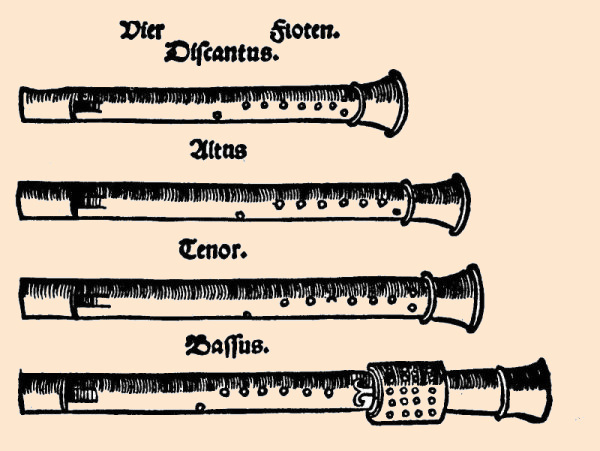
This drawing by Agricola
(1545) shows a typical renaissance quartet, with an alto recorder in g,
two tenor recorders in c and a bass recorder in f, all tuned a fifth
apart. The range of each instrument would have been an octave and a
sixth.The bore would have been cylindrical for most of the length, with a contraction near the lowest holes.
The keyless recorders have the last hole bored on both sides so that they can be played with the left or right hand uppermost,
the unused hole having been filled with wax. The keys can be operated from both sides for the same reason.
Click on the picture to see a fingering chart
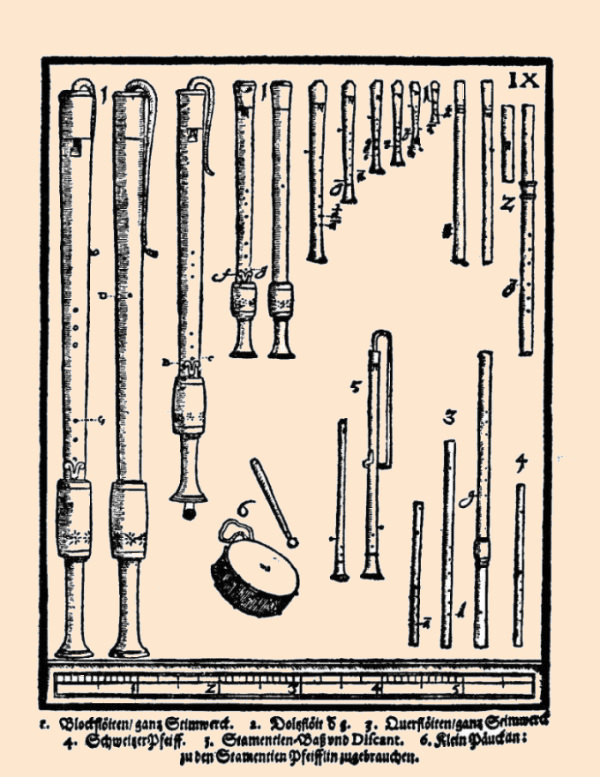
This drawing by Praetorius, which dates from the end of the renaissance (1619) shows a
larger family or consort of recorders. The lowest instruments are more than two metres long.
Click on the picture to see a fingering chart